
What Nobody Tells You About Champions League Draw Predictions
Champions League draw predictions are probability-based forecasts of how each club’s eight league-phase opponents may affect its route to the knockout rounds. For the 2026/27 UEFA Champions League, 36...
What Nobody Tells You About Champions League Draw Predictions
Champions League draw predictions are probability-based forecasts of how each club’s eight league-phase opponents may affect its route to the knockout rounds. For the 2026/27 UEFA Champions League, 36 teams face eight different opponents, with two clubs drawn from each seeding pot, split between home and away matches. The official draw is scheduled for 27 August 2026 in Monaco, while Matchday 1 is set for 8–10 September 2026. Paris Saint-Germain, Bayern Munich, Real Madrid, Liverpool, Manchester City, Arsenal and Barcelona form part of the elite group that can reshape the market immediately. However, a famous badge does not guarantee a top-eight finish. The key is to rate opponent strength, travel, home advantage, scheduling pressure and injury depth together. Always compare your prediction with the confirmed UEFA fixture list before placing any wager.
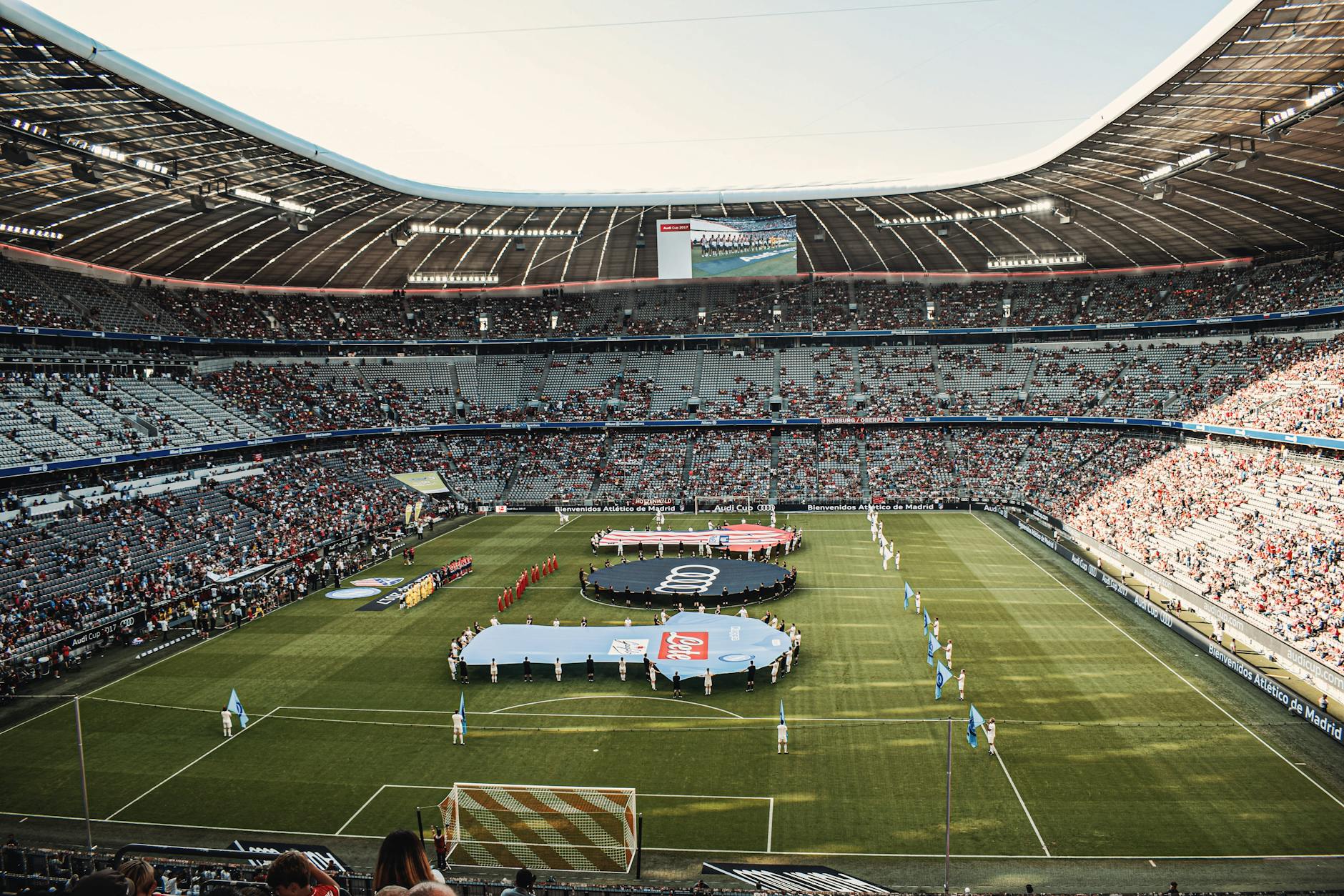
Photo by David Michael Bayliss on Pexels
The Champions League league phase changed the prediction problem completely. This is no longer a simple exercise in guessing whether one team finishes above another inside a traditional group. Each club now receives eight opponents and competes in one 36-team table, with the top eight advancing directly to the round of 16, places 9–24 entering the knockout play-offs, and positions 25–36 eliminated. That structure makes draw analysis more practical, but only if you stop counting famous opponents and start measuring the full schedule. UEFA’s official competition information explains the modern format and its qualification route in detail through the UEFA Champions League regulations. Coach’s Corner applies that same framework to match predictions, tactical trends and tournament coverage for fans following the 2026 season. For a broader explanation of seeding, consult our [Internal Link: Champions League league-phase format guide] before judging any club’s chances.
If you are predicting before the official draw: build a probability range
Before the official draw, Champions League predictions should be expressed as ranges rather than exact fixture lists. Use each club’s possible opponents, seeding pot, recent European performance and home-away balance to estimate the chance of a top-eight, play-off or elimination finish. A single “dream draw” is entertainment, not a reliable forecast.
The basic method is straightforward, although most casual previews make it needlessly dramatic. First, place every qualified club into its correct pot; second, assign the two-opponent home and away rule; third, estimate the expected points from each possible opponent; and finally, adjust for travel, rest and squad quality. Paris Saint-Germain may look unbeatable after winning the Champions League in consecutive seasons, but a projected schedule involving Barcelona, Manchester City, Roma, Aston Villa, Galatasaray, Villarreal, Slovan Bratislava and Como produces a very different workload from a soft schedule containing several lower-rated opponents. This is the first information edge: opponent count alone tells you almost nothing. The location of each fixture and the order in which difficult matches arrive can move a club’s expected total by several points.
- Rate each opponent using current strength, not historical reputation.
- Separate home fixtures from away fixtures before calculating expected points.
- Add a travel and recovery penalty for long journeys or awkward away venues.
- Create at least three scenarios: favourable, average and difficult.
- Recalculate after injuries, managerial changes and final registration news.
Want a cleaner way to follow the numbers and team context? Coach’s Corner provides daily tournament-focused analysis for supporters who want more than headline predictions.
If you know the confirmed opponents: compare schedule difficulty, not club names
Once the draw is confirmed, calculate schedule difficulty by combining opponent rating, venue and expected match timing. A club with two elite home matches may be better placed than a rival facing one elite opponent away, because home advantage, travel demand and tactical control change the likely points return. This is where confirmed Champions League draw results become genuinely useful.
A practical schedule score can use a simple weighted model: 45% opponent quality, 25% away-match difficulty, 15% travel burden and 15% fixture congestion. It is not an official UEFA statistic, but it forces disciplined thinking and prevents emotional overreaction. For example, Manchester City’s projected opponents in the reference market include Lens, Napoli, RB Leipzig, Paris Saint-Germain and Barcelona, while Lens could benefit from home matches against Bodø/Glimt and a more manageable trip to Slavia Prague. That does not mean Lens is stronger than Manchester City; it means the league-phase table rewards reliable points collection across eight games. According to The Athletic, star players and headline pairings can dominate public attention, but the quieter schedule details often decide the final positions.

Photo by Omar Ramadan on Pexels
The strongest prediction is usually not “which club wins the competition?” It is “which clubs are mispriced for their league-phase finish?” That distinction matters for betting because outright winner markets absorb reputation quickly, while top-eight and top-24 markets may react more slowly to travel, opponent distribution and defensive consistency. Free Super Tips, for example, has used finish bands such as 1–8 and 9–24 rather than pretending every pre-match probability is exact; its Champions League predictions page also shows how analysts connect a selection to specific opponents and likely points risks. Before staking money, read our [Internal Link: Champions League betting markets explained] and check local legality, age restrictions and responsible gambling rules.
If you are choosing a betting angle: wait for value and verify the rules
The best betting angle is the market where your estimated probability differs meaningfully from the bookmaker’s implied probability after margins. Champions League draw predictions can identify value in finish bands, qualification markets and selected matchups, but no model can remove variance from injuries, red cards, goalkeeper errors or late tactical changes. Treat every forecast as a priced opinion, never as a certainty.
The key is to calculate the implied probability before becoming attached to a selection. Decimal odds of 2.00 imply 50% before margin; odds of 1.50 imply 66.7%; odds of 3.00 imply 33.3%. Compare that figure with your own estimate, then demand a margin of safety rather than betting every small difference. A contrarian example is Barcelona: a talented squad can still miss the top eight if it faces Paris Saint-Germain away, Manchester City at home, Galatasaray away and several physically awkward fixtures. Equally, a club such as Lens may be underrated if its home schedule creates a dependable points base. This is the second information edge: top-eight predictions should include a volatility allowance. Teams relying heavily on one scorer deserve a larger downside adjustment than balanced squads with multiple creators and stable defensive rotations.
- Check whether the market settles on league-phase position or qualification.
- Confirm whether postponed matches affect the settlement date.
- Compare at least three regulated operators where legally available.
- Never treat promotional free bets as risk-free money.
- Set a fixed stake before seeing the odds.
For responsible guidance, the UK Gambling Commission states that “gambling should be fair and open,” which is exactly why terms, settlement rules and jurisdiction must be checked before registration. See the details through Coach’s Corner’s [Internal Link: responsible football betting checklist] before making any decision.
Common pitfalls to avoid
The most common Champions League draw prediction mistakes are overvaluing famous teams, ignoring away travel, using outdated form and confusing a good draw with a guaranteed qualification route. These errors are avoidable when predictions separate team strength, schedule difficulty and market price. A club’s badge is not a statistical input.
There is a particularly nasty trap in 2026/27 analysis: treating every published draw simulator as official. A simulator can create a plausible schedule from the pot rules, but it does not replace UEFA’s confirmed draw, final fixture calendar or competition regulations. RenderFoot’s simulator-style presentation is useful for exploring possible opponents, yet projected fixtures must not be presented as settled results until UEFA publishes them. I learned that lesson the unpleasant way after trusting a polished scam site that mixed “live” football information with invented market claims. Now I verify the competition page, date, venue and settlement wording twice. It takes three minutes and can save a very expensive mistake.
Use this verification checklist:
- Confirm the source says “official draw,” not “prediction” or “simulator.”
- Match every opponent to the correct pot and home-away assignment.
- Check the UEFA date, kick-off schedule and club registration updates.
- Compare the prediction with injuries reported by reliable media.
- Read the bookmaker’s settlement terms before placing a wager.

Photo by Tima Miroshnichenko on Pexels
Do not ignore tactical fit, either. Arsenal’s pressing structure may punish slow build-up teams, while Real Madrid’s transition threat can make possession statistics misleading. Liverpool, Inter Milan, Atlético Madrid, Borussia Dortmund and Sporting CP all represent different tactical problems, so a model based only on league-table ranking will miss important matchup effects. For deeper context, review [Internal Link: European club tactical matchups] and compare pressing intensity, set-piece output, possession under pressure and defensive depth.
The 30-day check-in
A 30-day check-in is the best time to refresh Champions League draw predictions because the first matchday reveals tactical roles, rotation patterns and fitness levels that pre-draw models cannot know. Reassess after the opening two league-phase fixtures, then update expected points, qualification probability and market value rather than defending the original forecast. Early evidence beats stubbornness.
The review should be structured, not emotional. Record expected goals, shots conceded, set-piece chances, goalkeeper saves, progressive passes and the availability of key players. A team that wins twice through late penalties may have six points but still carry weak underlying numbers; a team that draws twice after creating strong chances may be a better future value candidate. Check whether the manager’s actual system matches the pre-season plan, whether the midfield can handle elite pressure and whether substitutes preserve intensity after the 70th minute. UEFA’s official Champions League match centre is the correct starting point for results and fixtures, while reputable outlets such as ESPN and The Athletic help supply injury and tactical context.
A simple 30-day review table should include:
- Current points and goal difference.
- Opponent-adjusted expected goals for and against.
- Home and away performance separately.
- Injuries, suspensions and rotation changes.
- Remaining schedule difficulty.
- Current odds compared with your revised probability.
At this point, the best prediction may be to close a position, reduce exposure or do nothing. That is not weakness; it is proper risk control. Responsible bettors understand that passing on a bad price is a successful decision, especially when the market has already absorbed the obvious headline.
How should you update the model?
Update the model after every matchday, but use a larger review after 30 days or two league-phase matches. Weight new tactical and injury information heavily without discarding long-term team strength completely. This approach prevents one lucky result from dominating the forecast while still recognising genuine changes.
The most useful update is a blended rating: keep roughly 60–70% of the pre-draw strength estimate and allow 30–40% for new evidence during the opening month. That range is not a UEFA rule; it is a practical safeguard against overreaction. For instance, a two-goal win by Napoli against a weaker opponent should not instantly place Napoli above Bayern Munich, but repeated defensive errors across two matches must lower its expected points. Record the change and the reason for it, so your Champions League predictions remain auditable instead of becoming a collection of gut feelings.
Are you ready to track the tournament with clearer team and fixture analysis? Explore Coach’s Corner for ongoing 2026 football insights.
Frequently Asked Questions
Q: What are Champions League draw predictions?
A: Champions League draw predictions estimate how a club’s possible or confirmed league-phase opponents may affect its final position. Analysts consider seeding pots, home and away fixtures, opponent strength, travel and squad depth. Before the official draw, forecasts should use probability ranges; after 27 August 2026, predictions can use the confirmed eight-opponent schedule.
Q: How do I make Champions League draw predictions?
A: Start by listing the club’s eight opponents and separating home fixtures from away fixtures. Rate each opponent, apply a travel and congestion adjustment, estimate expected points and compare the result with top-eight and top-24 qualification thresholds. Recheck the model after injuries, managerial changes and the first two matchdays.
Q: What is the difference between a draw simulator and the official Champions League draw?
A: A draw simulator creates hypothetical fixtures, while the official UEFA draw determines the legally confirmed opponents and venues. Simulators are useful for testing favourable and difficult scenarios, but they cannot confirm betting settlements or match dates. Always verify the final schedule through UEFA before relying on any prediction.
Q: Is a famous team automatically a good top-eight prediction?
A: No, a famous team is not automatically a top-eight selection because the league phase depends on schedule difficulty as well as squad quality. Paris Saint-Germain, Barcelona, Manchester City and Real Madrid can still lose valuable points in difficult away fixtures. Compare expected points, opponent distribution and current odds instead of betting solely on reputation.
Q: Why do Champions League predictions change after the draw?
A: Predictions change because the confirmed opponents reveal the actual difficulty, travel burden and home-away balance. A club may move sharply after receiving two elite away fixtures or several manageable home matches. The market can also react to injuries, fixture congestion and the timing of matches during September and October 2026.
Q: How much should I stake on a Champions League prediction?
A: Stake only an amount that fits a fixed entertainment budget and never chase losses. A cautious approach is to use a small, consistent percentage of a pre-set bankroll, such as 0.5–1%, rather than increasing stakes after a defeat. Check legal requirements, operator terms and responsible gambling tools in your location before betting.
Q: What should I do if a published draw prediction looks wrong?
A: Check whether the prediction is labelled hypothetical, confirm the opponent pots and compare the information with UEFA’s official competition page. Scam sites may display invented “live” odds, copied logos or urgent registration offers without clear licensing details. Do not deposit money until the operator, market rules, payment process and withdrawal conditions have been independently verified.
The conclusion is blunt: strong Champions League draw predictions come from schedule mathematics, tactical context, verified sources and disciplined pricing, not loud opinions about superstar clubs. For the 2026/27 league phase, evaluate all eight opponents, separate home and away difficulty, revisit the forecast after 30 days and treat every betting market as a risk decision. Coach’s Corner is built to help football fans follow predictions, tactics, player statistics and tournament developments with that level of care.
Want to keep your 2026 football analysis organised and current?